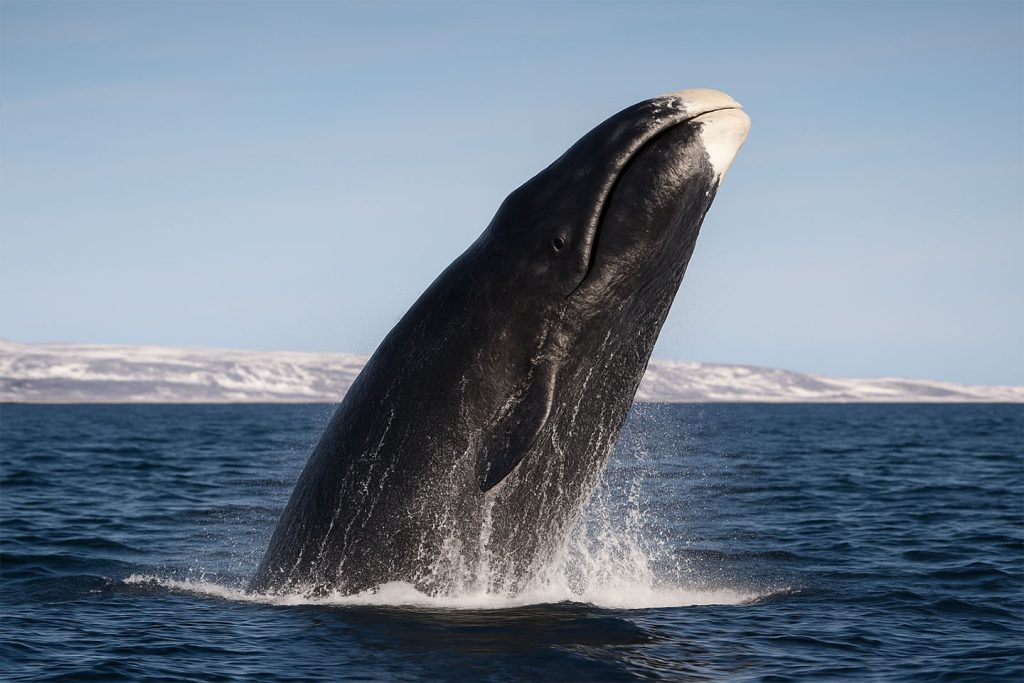
The Whale That Lives for Centuries: A Nature Study Explains Why
For over a millennium, Alaska’s Inupiat people have hunted and studied bowhead whales—massive Arctic mammals now believed to live longer than any other species on Earth. Modern science confirms these accounts: by measuring molecular damage in bowhead eyes, ears, and eggs, researchers estimate that some whales live up to 268 years.
A new study in Nature, led by Vera Gorbunova and Andrei Seluanov from the University of Rochester, uncovers why: bowhead whales have an exceptional ability to repair their DNA—a key to their extreme longevity and cancer resistance.
The Scientific Findings
- Extraordinary DNA Repair
- Bowhead whale cells fix broken DNA strands rapidly and with exceptional accuracy compared to other species.
- Unlike elephant cells—which self-destruct when damaged—bowhead cells prevent DNA damage from accumulating in the first place.
- The CIRBP Gene
- Researchers identified a crucial gene, CIRBP (Cold-Inducible RNA Binding Protein).
- Originally thought to protect cells from Arctic cold, CIRBP also helps repair DNA.
- When scientists inserted the bowhead whale version of CIRBP into human cells, the rate of DNA repair doubled.
- Fruit flies engineered with the bowhead CIRBP gene also lived longer than normal flies.
- Dual Adaptation
- The same adaptation that helped bowheads survive freezing waters also seems to shield them from aging and cancer, giving them both cold resilience and longevity.
- Implications for Humans
- Researchers are now testing mice modified with the whale’s CIRBP gene to see if it extends life or improves DNA repair in mammals.
- If safe and effective, this could one day help humans resist age-related diseases or slow cellular aging.
The Bigger Picture
This research fits into a growing field exploring how long-lived animals—from elephants to naked mole rats—evolved ways to prevent cancer and slow aging. Each species offers a different biological “trick.” The bowhead whale’s CIRBP gene now joins that list as a promising clue for future anti-aging therapies.
As one scientist summarized:
“Nature’s a beautiful experiment from which we can get all these really cool clues for new drugs and therapeutics.”