
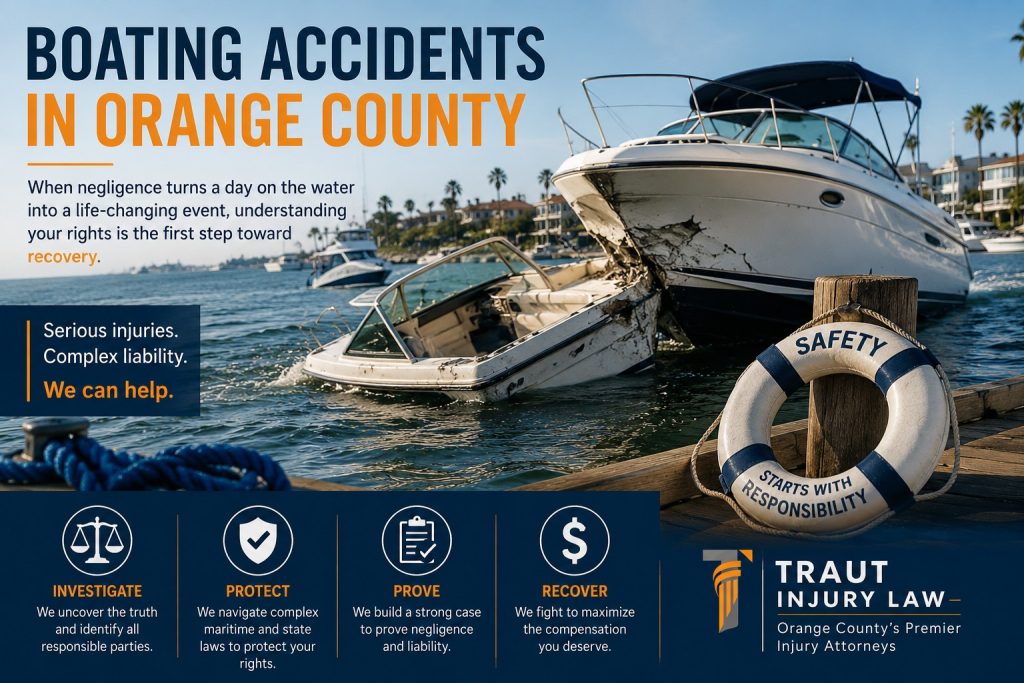
Boating Accident Claims: Navigating Liability and Recovery in Southern California
Southern California’s waterways offer endless opportunities for recreation, from Newport Harbor and Huntington Harbor to Dana Point and the open Pacific Ocean. Unfortunately, a day on the water can quickly become tragic when a boat operator, rental company, manufacturer, or vessel owner fails to act responsibly.
Unlike automobile collisions, boating accidents often involve unique laws, multiple potentially responsible parties, and serious injuries. Understanding your rights after a boating accident can make a significant difference in protecting your health, your finances, and your future.
Most Boating Accidents Are Preventable
While many boating accidents are dismissed as unavoidable mishaps, the reality is that most are caused by human error. Common causes include:
- Operator inattention
- Excessive speed
- Alcohol or drug impairment
- Inexperienced boat operators
- Failure to maintain a proper lookout
- Unsafe operation in congested waterways
- Equipment failures and poor vessel maintenance
Whether operating a luxury yacht, personal watercraft, fishing boat, or rental vessel, every operator has a duty to act reasonably and safely under the circumstances.
Common Types of Boating Accidents
Boating incidents take many forms, including:
- Boat-to-boat collisions
- Collisions with docks, jetties, or fixed objects
- Personal watercraft (Jet Ski) accidents
- Passenger falls overboard
- Propeller strikes
- Wake-related injuries
- Capsizing incidents
- Fires and explosions
- Carbon monoxide exposure
- Diving injuries
Even relatively low-speed impacts can result in severe injuries because passengers often lack seat belts, airbags, or other protective restraints.
Serious Injuries Frequently Occur
Boating accidents often produce catastrophic injuries, including:
- Traumatic brain injuries
- Spinal cord injuries
- Neck and back injuries
- Fractures
- Drowning and near-drowning injuries
- Severe lacerations
- Amputations caused by propellers
- Internal injuries
- Wrongful death
Victims frequently require extensive medical treatment, rehabilitation, and long-term care.
Who Can Be Held Responsible?
One of the most important questions after a boating accident is determining who is legally responsible.
Boat Operators
Boat operators may be liable when they:
- Operate at unsafe speeds
- Fail to keep a proper lookout
- Operate while impaired
- Ignore navigation rules
- Engage in reckless conduct
Boat Owners
A vessel owner may be responsible even if someone else was operating the boat. Owners have a duty to maintain their vessels and avoid entrusting them to inexperienced or unsafe operators.
Rental Companies
Rental companies can be held accountable when they:
- Fail to properly inspect vessels
- Rent boats to unqualified operators
- Provide inadequate instructions or safety equipment
- Ignore known safety concerns
Manufacturers
Some accidents occur because of defective products, including:
- Steering failures
- Engine malfunctions
- Fuel system defects
- Electrical failures
- Defective safety equipment
In those cases, a product liability claim may exist against the manufacturer, distributor, or seller.
Special Legal Issues in Boating Cases
Boating injury cases can be more complicated than typical motor vehicle collisions because federal maritime law may apply in certain situations. Depending on where the accident occurred, issues involving admiralty jurisdiction, comparative fault, vessel ownership, and federal regulations may affect the claim. Determining which laws apply requires careful legal analysis and prompt investigation.
What Should You Do After a Boating Accident?
If you are injured in a boating accident:
- Seek medical attention immediately.
- Report the accident to the appropriate authorities.
- Obtain contact information for witnesses.
- Photograph the vessels, injuries, and scene if possible.
- Preserve all evidence and records.
- Avoid giving recorded statements to insurance companies without legal advice.
- Consult an experienced boating accident attorney as soon as possible.
Early investigation is often critical because witness memories fade, vessels are repaired, and important evidence can disappear.
Protecting Your Future
Insurance companies frequently attempt to minimize boating injury claims by disputing liability or blaming injured passengers. A thorough investigation is often necessary to determine what happened and identify every responsible party. At Traut Injury Law, we understand the unique challenges involved in boating accident litigation. Our team investigates vessel operations, maintenance records, operator conduct, safety violations, and product defects to help injured victims pursue the compensation they deserve. If you or a loved one has been injured in a boating accident, do not assume the insurance company will do the right thing. Understanding your rights and acting quickly can make all the difference.
A day on the water should create memories—not injuries. When negligence turns recreation into tragedy, Traut Injury Law is here to help.